
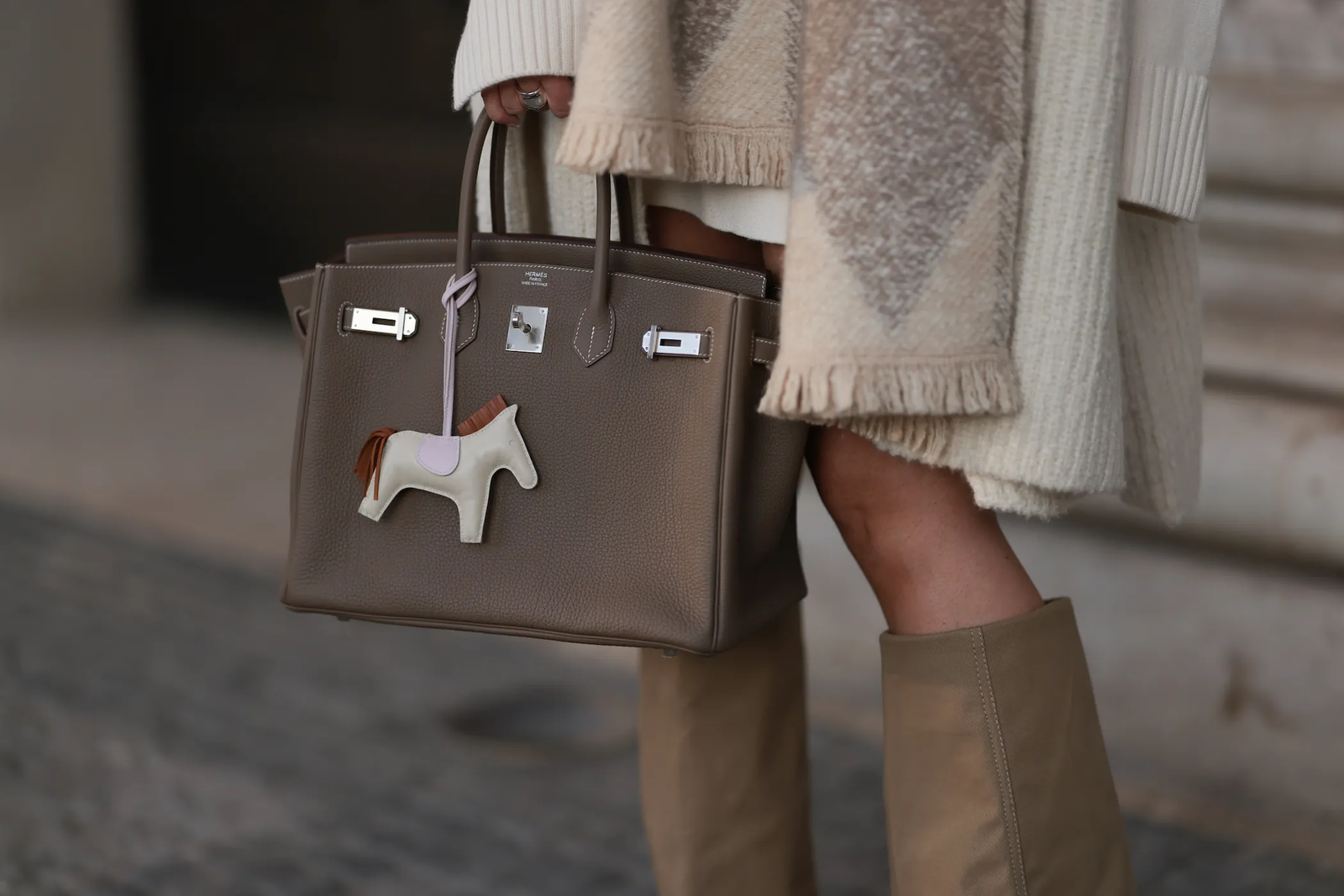
Hermès handbags—especially the Birkin, Kelly, and Constance—are some of the most coveted luxury items in the world. Their exclusivity, craftsmanship, and timeless design have made them global symbols of status and artistry. But behind the long waitlists and sky-high resale prices lies a deeper story: Who actually makes Hermès handbags?
Unlike many luxury houses that outsource production or rely on assembly-line manufacturing, Hermès takes an entirely different approach. Every handbag is handcrafted from start to finish by trained artisans in dedicated Hermès workshops across France. The identity of the maker is so central to the brand’s ethos that each bag carries discreet signature markings revealing the craftsperson behind it.
Understanding exactly who makes Hermès bags—and how they are made—offers insight into why these pieces are so rare, why they hold value so well, and why they remain unmatched in the world of luxury leather goods.
Hermès Artisans: The People Behind Every Bag
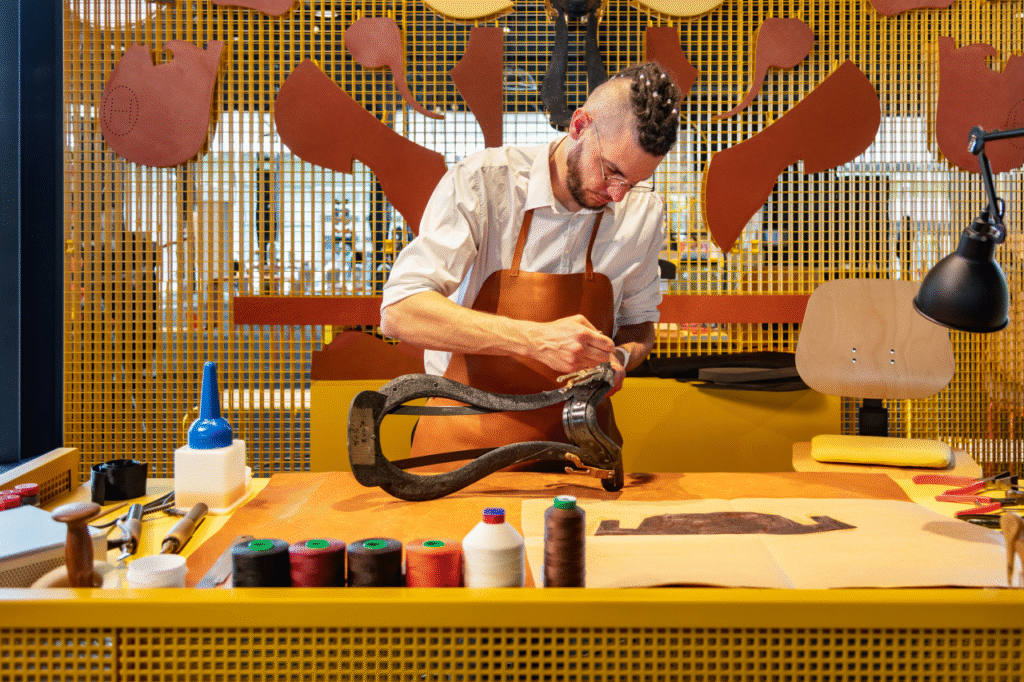
At the heart of Hermès is its extraordinary team of artisans—highly trained craftspeople who dedicate years to mastering leatherwork techniques before being entrusted to create a Birkin, Kelly, or Constance. Hermès does not mass-produce its handbags. Instead, its artisans operate more like master jewelers, applying traditional saddlery skills passed down for generations.
Handcrafted From Start to Finish
Each Hermès bag is made by one artisan, not by an assembly line. This single-craftsperson system ensures:
Perfect continuity in stitching Uniformity in tension, shape, and form Full accountability for the final product A level of artistry that no machine or multi-person assembly could replicate
This method is rooted in Hermès’ original heritage as a saddle maker, dating back to 1837. Working leather with precision, patience, and exacting standards is the brand’s core identity.
Where Hermès Handbags Are Made: Exclusive French Leather Workshops

Hermès bags are manufactured exclusively in Hermès-owned ateliers in France. These workshops are located in regions with strong traditions of leather craftsmanship, including:
- Paris Lyon
- Montbron
- Seloncourt
- Nontron
- Epernay
- Saint-Junien
- Abilly
- Liège (France’s artisan region, not Belgium)
Each atelier is a specialized facility focusing on leather goods, where artisans work in serene, light-filled studios designed for concentration and precision.
Hermès has expanded its workshop network over the years to meet growing demand—but maintains total control. The brand does not license out production, does not outsource, and does not manufacture bags outside of France. This strict control ensures that every bag meets the brand’s standard of craftsmanship.
How Hermès Trains Its Artisans: A Multi-Year Journey
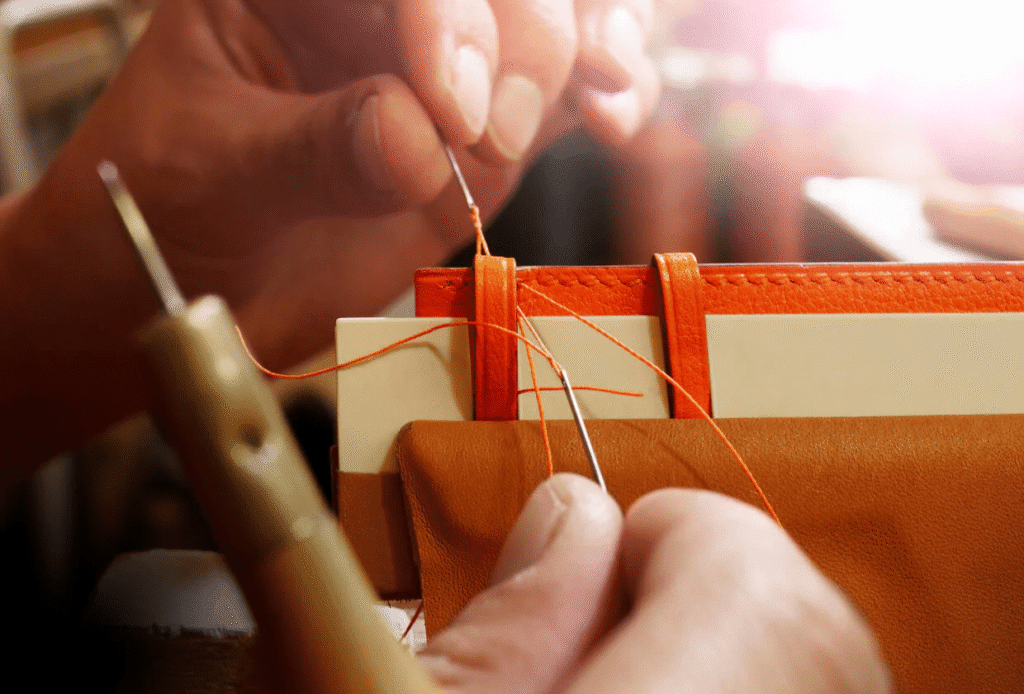
Before an artisan is allowed to produce a Hermès bag, they undergo a rigorous training program that can last up to three years. During this period, they learn:
- Saddle stitching
- Edge dyeing
- Leather skiving
- Handle wrapping
- Gusset formation
- Hardware installation
- Precision cutting using templates
- Finishing techniques specific to Hermès styles
The most important skill is the Hermès saddle stitch, an ultra-durable, hand-sewn technique using two needles and a single thread. This stitch is stronger and more reliable than machine stitching, and is one of the defining characteristics of authentic Hermès bags.
Only after mastering every step can an artisan create handbags that bear the Hermès stamp.
Signature Artisan Marks: The Hidden Clues Inside Every Bag
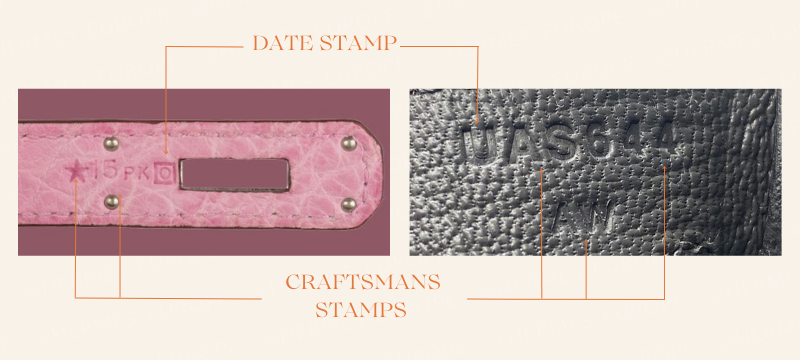
Hermès bags carry discreet markings that identify:
- The artisan who crafted the bag
- The atelier location
- The production year
These codes are not prominently visible, but collectors and experts can read them to verify authenticity and trace a bag’s origins. No other luxury house embeds this level of transparency and accountability into each piece.
This marking system reinforces Hermès’ belief that the maker matters—that every bag is the product of a human hand and a specific individual’s expertise, not an anonymous production line.
Why Hermès Does Not Mass Produce Bags

Even though demand for Birkin and Kelly bags is extraordinarily high, Hermès refuses to increase output dramatically. Several reasons explain this:
1. Craftsmanship Cannot Be Rushed
A Birkin or Kelly takes 15 to 25 hours of meticulous handwork—sometimes more, depending on the material. Exotic skins like crocodile require even more time and precision.
2. Scaling Too Fast Would Dilute Quality
Hermès safeguards its reputation by prioritizing perfection over volume. Only artisans who meet the company’s craftsmanship standards are allowed to produce bags.
3. Materials Are Limited and Regulated
Hermès uses premium natural leathers sourced from:
- French calfskin tanneries
- Andalusian bull hide
- Swift leather
- Togo leather
- Clemence leather
- Ostrich leather
- Niloticus and Porosus crocodile (ethically and legally sourced)
Hermès manages material availability carefully to avoid waste and preserve ethical standards.
4. Exclusivity Is Part of the Brand DNA
Hermès produces fewer bags than the global market demands partly because exclusivity enhances mystique—and partly because true craftsmanship cannot be scaled endlessly.
The Role of the Hermès Leather Supply Chain
While craftsmanship takes center stage, material sourcing also plays a crucial role in who “makes” a Hermès bag. Over decades, Hermès has invested heavily in controlling its leather supply chain.
The company owns majority stakes in several tanneries, including:
- Tannerie d’Annonay
- Tannerie Haas
- Crocodile farms ethically compliant with international regulations
This vertical integration ensures that Hermès artisans always work with the highest-quality leather—cut, dyed, and prepared following Hermès’ exacting standards.
The Human Touch: What Sets Hermès Craftsmanship Apart
Several factors make Hermès craftsmanship extraordinary:
1. Every Cut Is Manual
Artisans cut leather using metal templates, not automated cutters.
2. The Iconic Saddle Stitch
This hand stitch is stronger than machine sewing and is nearly impossible to replicate perfectly in counterfeits.
3. No Glue-Dependence
Where other brands rely heavily on adhesives, Hermès bags rely on stitching and structural integrity.
4. Hours of Finishing Work
Edges are sanded, dyed, waxed, and polished by hand.
5. Precision in Structure
Handles, flaps, gussets, and pockets must align perfectly—a defining mark of a genuine Hermès bag.
6. Artisan Pride
Because one artisan completes the entire bag, each piece carries a unique identity and soul—something assembly-line production cannot recreate.
Do Fashion Students Train to Become Hermès Artisans?
Hermès has its own training workshops and frequently collaborates with:
- French leather schools
- Craftsmanship academies
- Specialized vocational programs
However, becoming an Hermès artisan is highly selective. Many come from families with long histories in leatherworking or have backgrounds in luxury craftsmanship.
Hermès continues to expand training programs across France to meet rising demand for skilled artisans, particularly as global interest in Birkins and Kellys accelerates.
Does Hermès Ever Use Machines?
Hermès uses machines only where technically necessary—mainly for:
- Pressing logos
- Cutting metal hardware
- Shaping certain leather parts
- Quality testing
But the actual construction of each bag is entirely manual. Machines assist with precision; artisans provide the soul.
Why Understanding the Maker Adds Value
Collectors often say that part of the magic of owning an Hermès bag is knowing that a single human being crafted it—from the first cut to the final polish.
This deepens the experience because:
- The bag becomes a personal work of art
- Each artisan has a distinct style of stitching
- The bag reflects human skill, not mass production
- Craftsmanship stories enhance emotional value
This connection between maker and buyer is rare in the luxury industry—and increasingly precious in a world where machines dominate production.
Final Thoughts: Hermès Bags Are Made by Artisans, Not Factories
So, who makes Hermès handbags?
The answer is both simple and profound: Highly trained Hermès artisans in France make every single bag—by hand, from start to finish.
There are no shortcuts, no outsourcing, and no automated assembly lines. Each bag is a masterpiece created by one pair of hands, carrying the spirit of centuries-old leatherworking traditions. Understanding this explains why Hermès bags are rare, valuable, and cherished for generations.
When you buy a Birkin, Kelly, or Constance, you’re not just buying a handbag—you’re acquiring a piece of living craftsmanship, shaped with patience, skill, and artistry by one of the world’s most exceptional makers.
Comments
2 responses
[…] you ever picked up a beautifully crafted object — a leather bag, a smartphone, a ceramic mug — and wondered who made it, where it came from, or what processes […]
[…] One of the strongest differentiators of Hermès watches is the strap craftsmanship. While most luxury brands outsource straps, Hermès produces them in-house, using the same artisans who create Birkin and Kelly bags. […]