Little Blossom has emerged as a popular baby-food brand within Singapore and Southeast Asia, offering organic snacks for infants and toddlers with a focus on natural ingredients, no added sugar or salt, and halal certification. While the brand is increasingly visible on shelves and online, the question of who actually manufactures Little Blossom’s products deserves closer scrutiny. Understanding the production story behind the brand helps consumers appreciate the sourcing, quality controls and manufacturing network supporting the product.
The Brand Story – “Designed in Singapore”
Little Blossom was founded by co-founders Gillian Choo and Kwek Yi Jun, both Singapore-based and formerly working in large consumer goods companies. They launched the brand after identifying a gap in the baby food market in Singapore: products with added sugar, salt or preservatives, and limited options for parents seeking healthier snacks. The brand positions itself clearly as Singapore-based and targeted for local tastes.
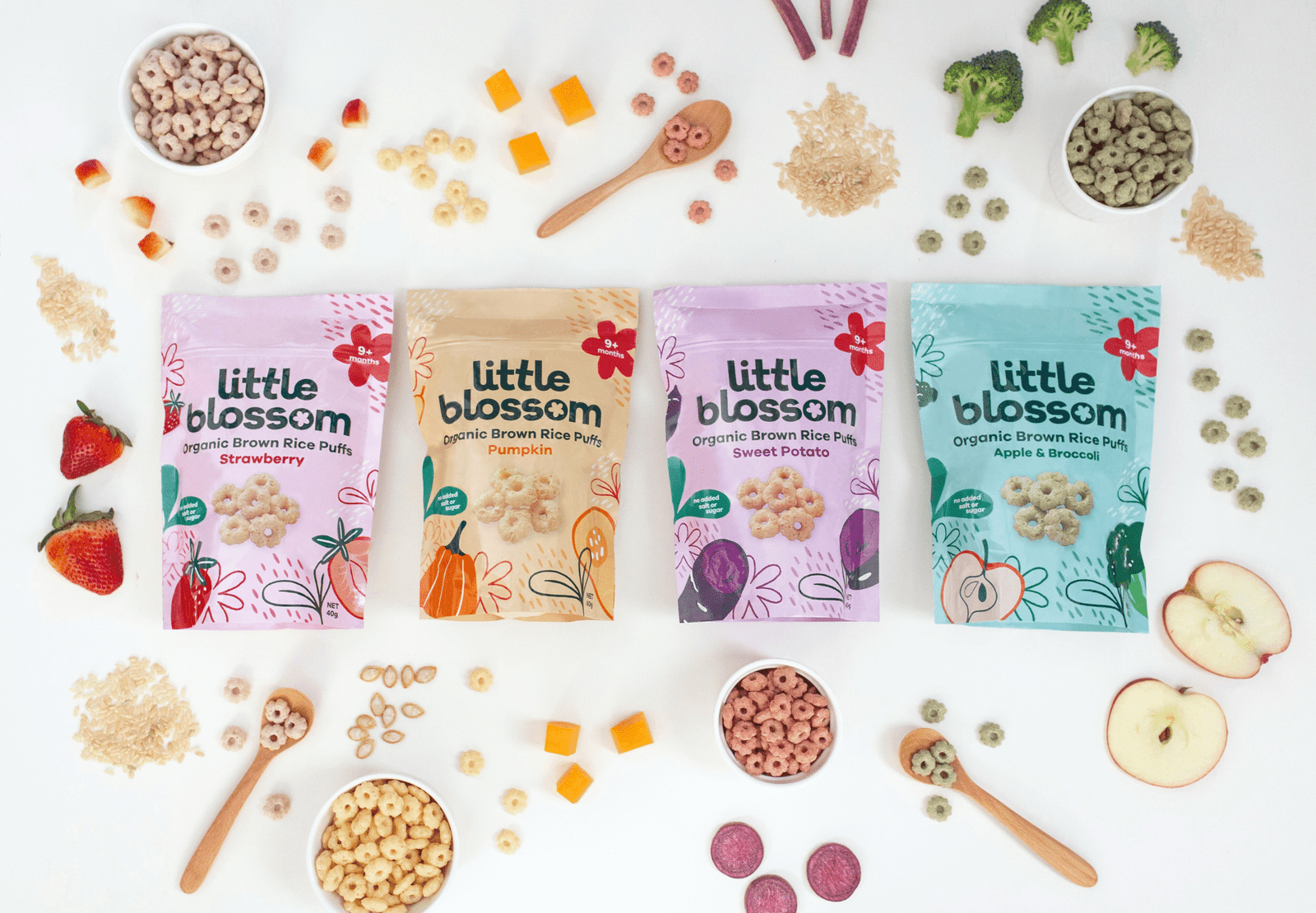
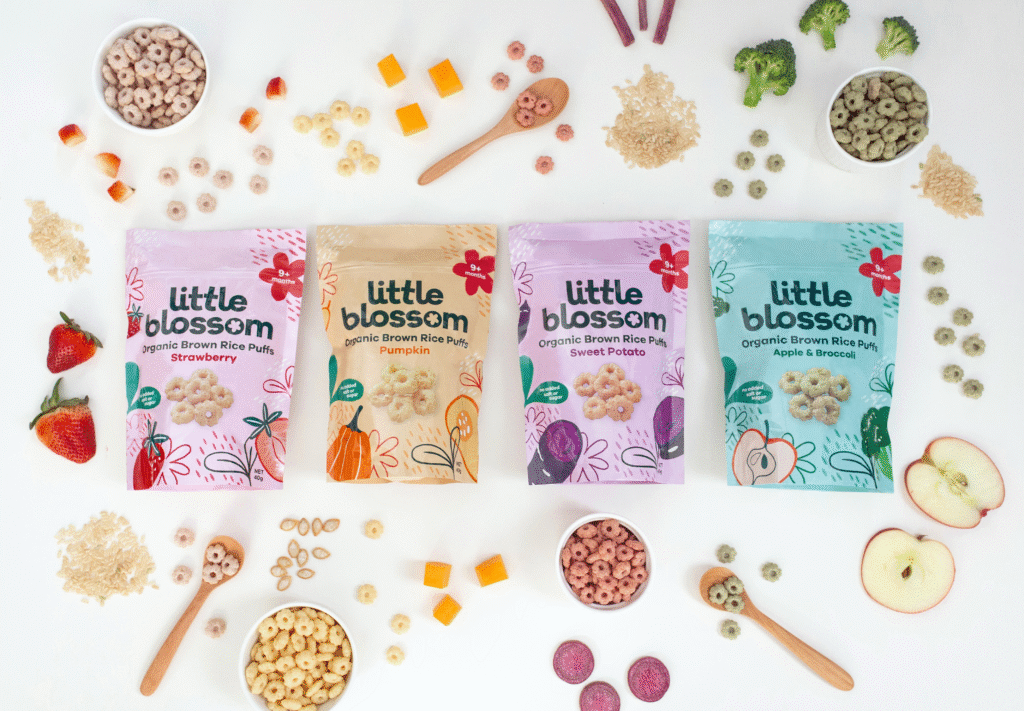
In terms of product portfolio, Little Blossom offers organic brown rice cereals, brown rice puffs, veggie and fruity sticks for toddlers, gift sets and feeding essentials.
So what does this mean for manufacturing? It suggests Little Blossom is primarily a brand and product‐concept company, designing products, specifying ingredient standards, packaging and distribution—while relying on contract manufacturing or co-packers to produce the physical snacks.
What the Public Information Reveals About Manufacturing
While Little Blossom does not publicly disclose the name of every factory or manufacturing partner by SKU, key sources reveal a few important clues:
- According to an article, Little Blossom began working with a Thailand-based factory for snack production early in its development, under requirements to create all-natural and organic baby snack products.
- The brand emphasises its quality controls and testing—reading that “we make sure to test every batch of our products before it gets imported & distributed to our customers.”
- Ingredient sourcing is international: While the website states that Little Blossom draws from nature for ingredients, the exact origin of raw materials is not detailed in full.
From this, one can infer that Little Blossom uses third‐party manufacturing partners in the region, likely in Thailand (and possibly other Southeast‐Asian countries) for snack production, with brand oversight from Singapore. The brand handles branding, recipe development, packaging design and distribution, while the physical manufacture is outsourced.
Why This Model Makes Sense for Little Blossom
For a young, rapidly growing FMCG brand based in Singapore, using contract manufacturers rather than building their own plant is economically and operationally logical. Some of the advantages include:
Access to existing food manufacturing infrastructure (machinery, certifications, supply chains) rather than building from scratch Ability to focus resources on brand building, recipe innovation, marketing and distribution Flexibility to scale production up or down with demand across markets Cost efficiency in a region where co-packing and contract snack production is well established
Indeed, one profile of Little Blossom notes that the founders pegged a Thailand-based factory because they needed a partner who could meet organic/halal standards, work to their ingredient specification and scale in a region close to Singapore.
This model is common among “design‐first” FMCG brands: define the product, specify the standards, select a reliable manufacturer, then handle branding and distribution.
What This Means for Consumers & Quality Assurance
While Little Blossom may not own its own manufacturing facility, the brand emphasises stringent quality controls and ingredient standards. Key features that help assure consumers include:
- No added sugar, salt or preservatives in the product line.
- Certifications such as halal and organic (the brand states “organic, all natural ingredients”).
- Batch testing and import/distribution controls in Singapore before retail.
- Ingredient transparency and brand story aimed at informed parents seeking healthier alternatives.
However, from a manufacturing transparency perspective, consumers interested in which exact factory or which country all SKUs are produced in may find the public information limited. The early use of a Thailand factory is noted, but whether every SKU is produced there or in other countries is not fully detailed.
Expanding Regional Markets & Manufacturing Implications
As Little Blossom scaled beyond Singapore, the brand expanded into Malaysia, Vietnam, the Philippines, Brunei and the Maldives. Serving multiple markets adds complexity to manufacturing, packaging, certification and logistics. It likely means that:
- The chosen factory (or factories) must adhere to various regional regulations (organic certifications, halal, import standards)
- Packaging, labelling or even flavour variations may be adjusted for different markets
- The brand may use regional warehousing or co-packing for distribution
For example, a batch manufactured in Thailand might be shipped to Singapore for final finishing, or produced regionally in Malaysia for Malaysian distribution. While direct evidence is not public, this pattern is consistent with how regional food brands scale across Southeast Asia.
Final Thoughts: Little Blossom’s Production Model in Summary
In summary: Little Blossom is a Singapore-founded baby-food brand that designs, sources and markets its products, while relying on contract manufacturing in Southeast Asia (notably a Thailand-based factory early in its lifecycle) to produce the actual snacks. The brand emphasises organic, all-natural ingredients, no added sugar or salt, and halal certification—placing heavy emphasis on product standards and consumer trust.
For consumers asking “who makes Little Blossom?”, the answer is that while the brand retains control of its recipes, branding and market interface, the physical manufacturing is handled by third-party factories meeting Little Blossom’s specifications. This production model enables the brand to grow quickly, expand regionally and maintain quality without the heavy investment of owning manufacturing infrastructure.
For food industry watchers, this offers an example of a modern consumer-packaged goods brand leveraging regional manufacturing, branding strength and ingredient differentiation to create value. For parents and consumers, this means Little Blossom’s appeal rests on transparency of ingredients and product mission—not necessarily on owning manufacturing in house.